A ledger should belong to the person living inside it.
Core financial work remains useful locally. Connected behavior is separately disclosed. Architecture, copy, and interface all answer to that boundary.
Kapers took Garden from premise through product model, identity, interaction, architecture, desktop workspace, mobile daily instrument, import, privacy boundaries, motion, and production code.
Core financial work remains useful locally. Connected behavior is separately disclosed. Architecture, copy, and interface all answer to that boundary.
Workbench handles administration and deep inspection. Daily Garden handles glance, capture, confirmation, and correction. Shared data does not require shared interaction.
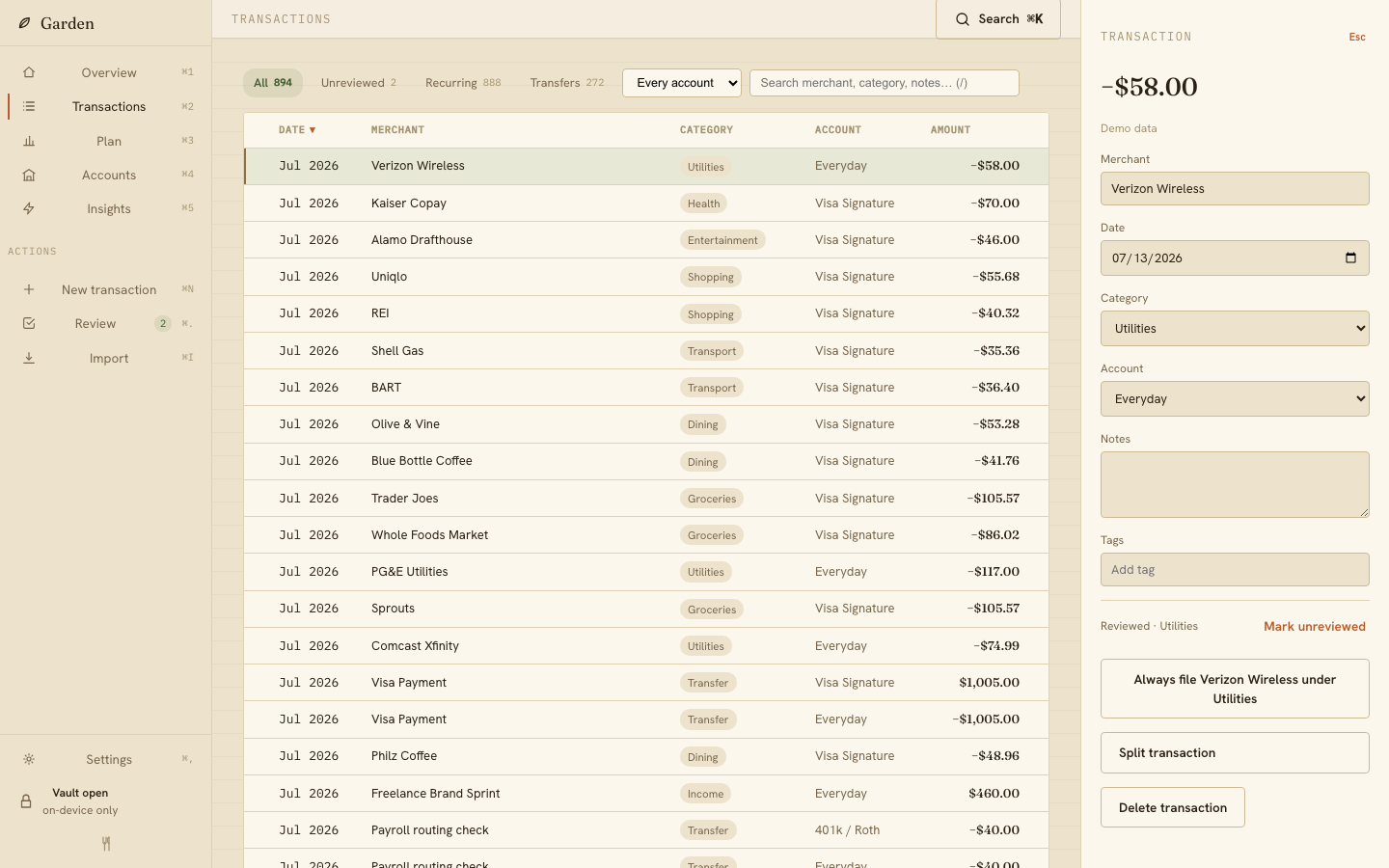
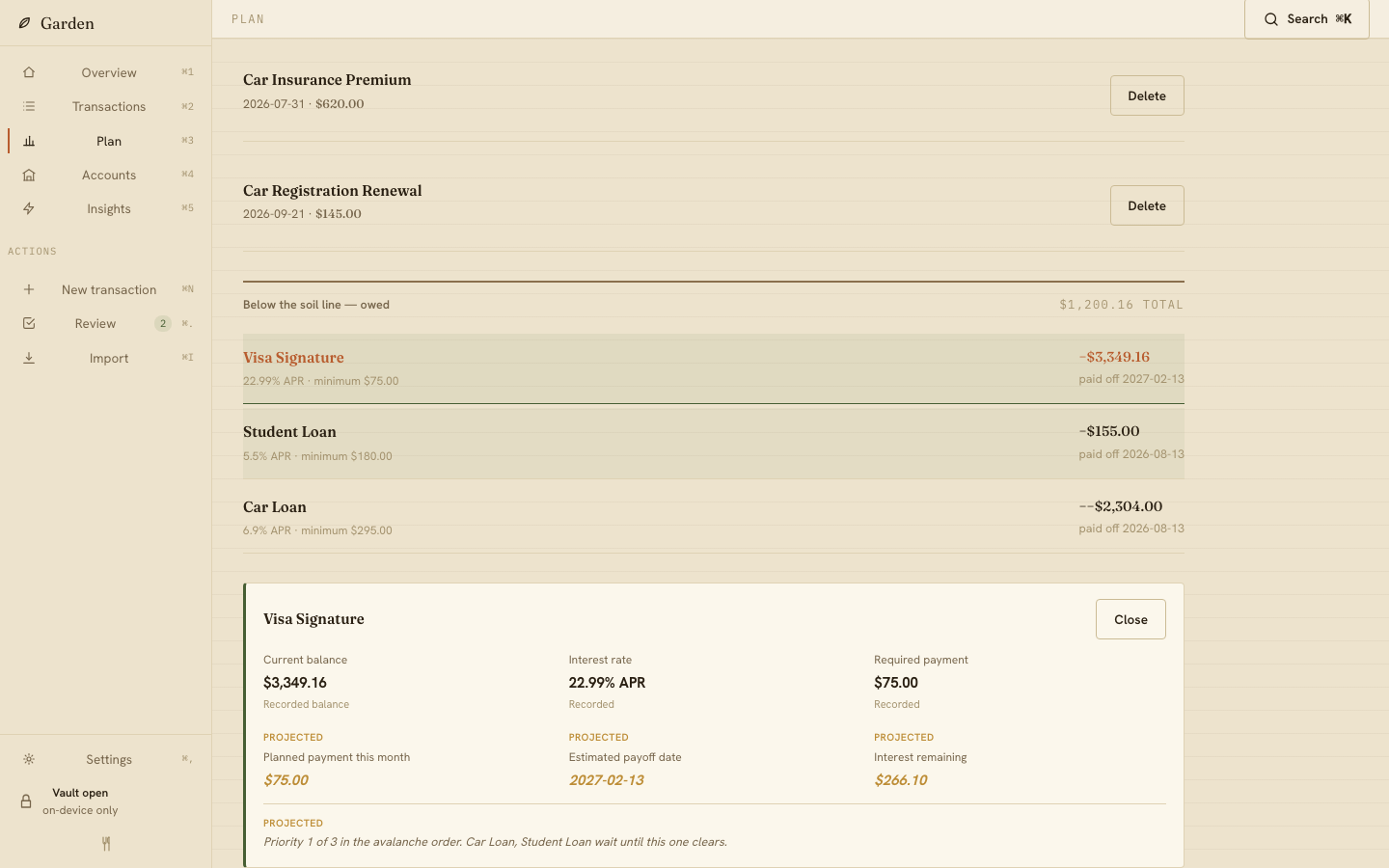
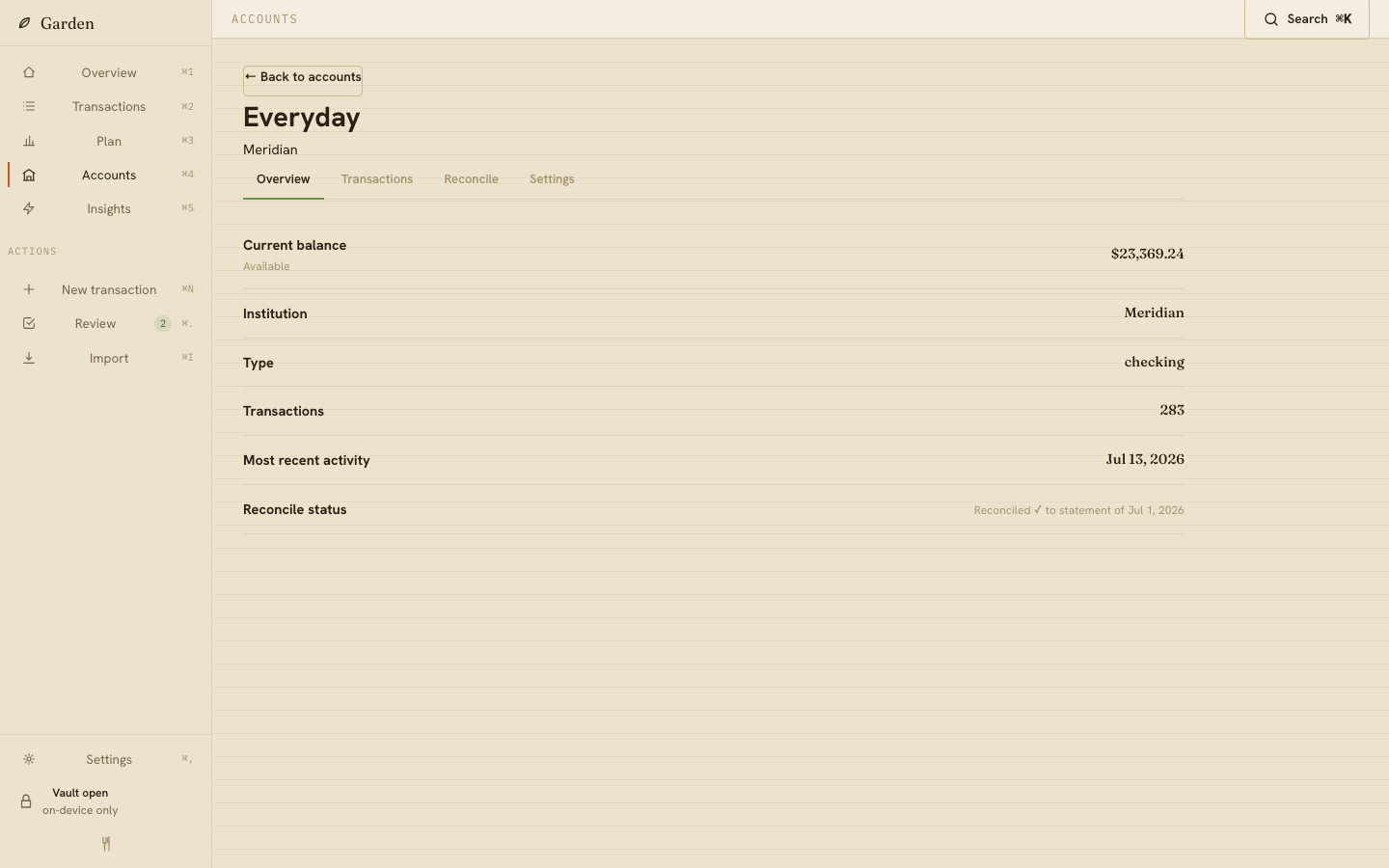
Transactions keep the ledger visible while the Inspector enters. Plan separates recorded facts from projections. Accounts open a dedicated workspace. Insights stay tied to questions.
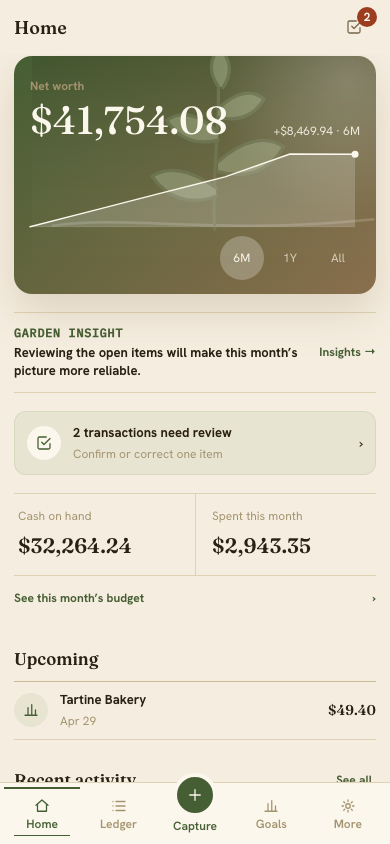
The mobile product removes administration from the main path and prioritizes position, recent activity, goals, capture, review, and a clear route to deeper contexts.
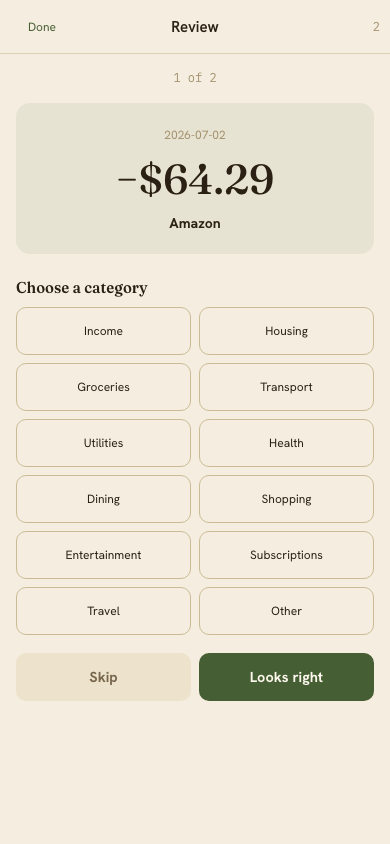
Garden recognizes supported CSV/PDF statements, resolves a mapping, previews rows, holds possible duplicates, and commits only after inspection. Undo remains available.
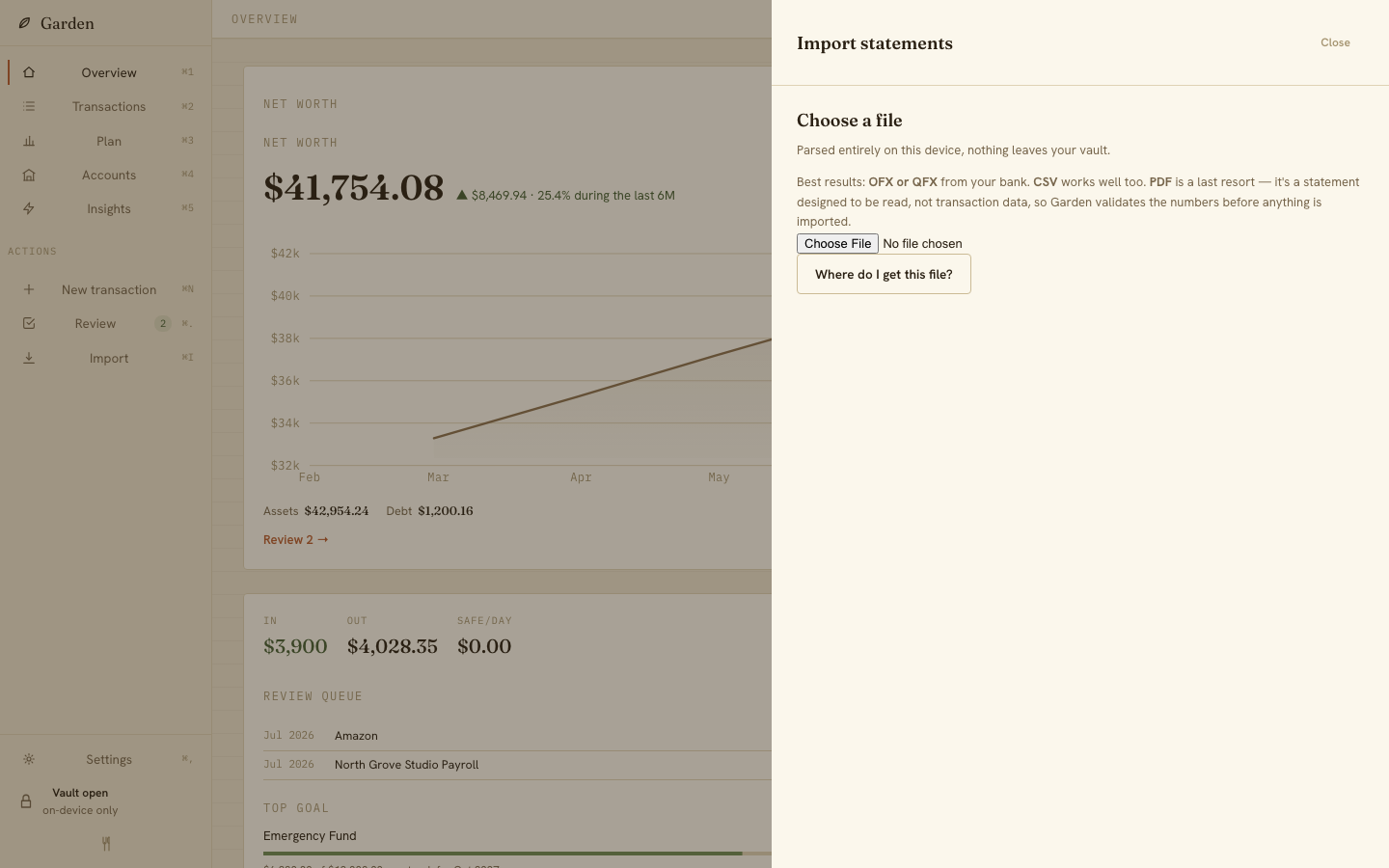
Local mode keeps ledger data on the device. Connected mode passes selected data through Plaid and a stateless Garden relay; no decrypted server-side copy is retained.
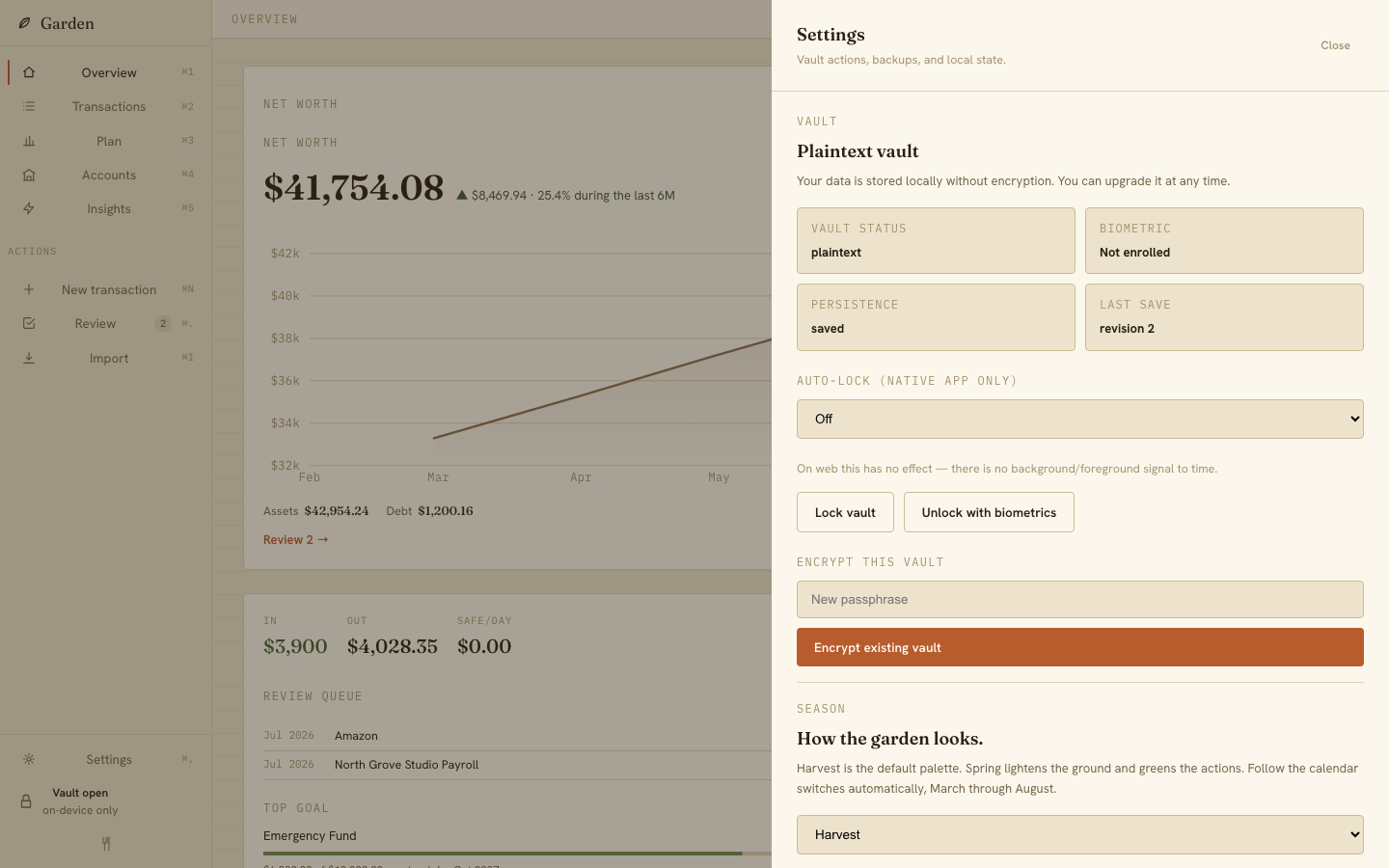
Capture provenance: Garden commit 16e4f787142922dc3c7413120caacca9098df8ff · version 1.0.0-rc.4 · 19 current product captures · 13 Jul 2026. Live test count remains a dated 712-test July 2026 snapshot; it is not used as a timeless claim.
When product model, interface, motion, and implementation need one accountable direction.
hello@khushin.dev ↗